
Oprima este enlace para leer la versión en Español
Hello, friends of the blog!
After many years of waiting for a wardrobe turnaround, I’ve decided to turn the page. The Queen is who she is, and so she will remain. The long hair, the same shoe in every color of the rainbow, the muscular arm, and the tiara in its box, getting more rest than a vacation on the Costa del Sol. I’ve decided to move on from trying to rescue her outfits.
Giving up on waiting for a miracle has had its upside: it has let me look up from the jacket and see what’s happening around it. And around it, every week, there are projects with names and surnames, ingenious ideas, and people who do excellent work without anyone shining a spotlight on them.
That is what this new chapter is about. I’ll tell you what these events are, who drives them, who they help, and why she is sent to attend them. The outfit doesn’t leave entirely, of course: it stays on as a visitor at the end of each chronicle, like the guest who is hard to say goodbye to. From time to time we’ll also peek at similar initiatives from other corners of the world. I arrive knowing almost nothing about all this, with plenty of curiosity and the well-founded suspicion that you know more than I do. Tell me what you know, because here we learn as a group. Let’s begin.
ACT 1: Mental Health 2025
According to the Casa Real’s website
Her Majesty the Queen presides over the official ceremony for World Mental Health Day 2026.
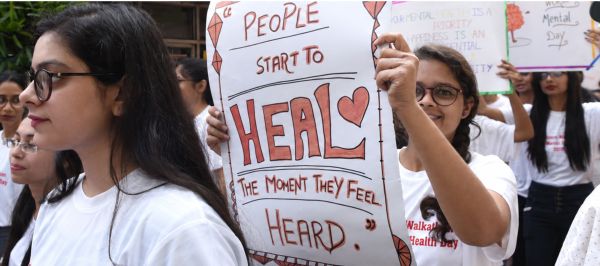
On October 9, in a Madrid hotel, Doña Letizia presided over the event with which Spain marked World Mental Health Day. It was organized by Confederación Salud Mental España (Spain’s Mental Health Confederation), with the support of the Ministry of Social Rights, Consumer Affairs and the 2030 Agenda and of the ONCE Foundation. The slogan, «Haz match con tu salud mental» («Match with your mental health»), sounds like a dating app, except that here the date is with yourself. Behind it lies a serious concern for the youngest: the WHO estimates that one in seven boys and girls between 10 and 19 lives with some kind of mental health disorder, and the INE (Spain’s National Statistics Institute) notes that in recent years the picture among minors has worsened. Hence the day focused on something within everyone’s reach: preventing, detecting early, talking without taboos, and having help nearby. The WHO devoted October 10, the following day, to a very sensible idea: that people who have lived close to a mental health problem take part in deciding how care is organized, rather than merely telling their story. In its latest survey, eight out of ten countries with a national plan in the field say they prepared it by listening to those people.
The band Ombligo played at the beginning and at the end. In between there was a video, the reading of the manifesto by representatives of the Comité Pro Salud Mental and of the Red Estatal de Mujeres de Salud Mental España, and a talk moderated by journalist Macarena Berlín with three guests: Mateo Gualdaroni, of the Asociación Española de Apoyo en Psicosis (Spanish Association for Support in Psychosis); Sara Villodre Pérez, president of the Consejo de la Juventud de España (Spain’s Youth Council); and Claudia Campillo, a science communicator and activist on sexual violence. The Queen spoke to say that emotional distress is often invisible, that going to a psychologist is far more normal today, but that finding one when you need one is still hard. In her view, news that is only half good. Incidentally, she arrived in her office-worker suit, perfectly proper, the kind nobody would recognize as a Queen’s. When the event ended and the group photo was taken, she stayed a while chatting with the attendees. I ask you: do you know of any project in your neighborhood or city where young people help decide how their peers are supported? Tell us in the comments.
ACT 2: National Day
According to the Casa Real’s website
Their Majesties the King and Queen, together with Her Royal Highness the Princess of Asturias and the Infanta Sofía, presided over the solemn ceremony honoring the National Flag and the military parade held in Plaza de Cánovas del Castillo.
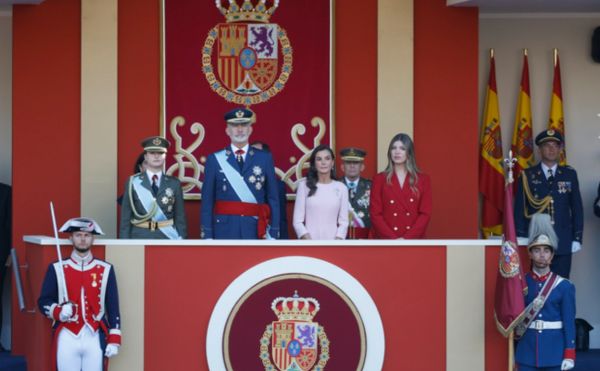
On October 12, National Day, Doña Letizia presided in Madrid, alongside the King and their two daughters, over the tribute to the Flag and the military parade at Plaza de Cánovas del Castillo. Paratroopers of the Air and Space Force came down from the sky with a flag identical to the one that was raised afterwards, and it reminded me of 2019, when the paratrooper carrying the flag, Corporal First Class Luis Fernando Pozo of the Army’s Paratrooper Brigade, got his parachute tangled in a lamppost next to the grandstand. From what the video shows he did not appear to be hurt, though his face betrayed how shaken he was, almost on the verge of tears. The King and Queen, their daughters and the guests applauded to cheer him up, and then the King and Queen stopped to talk with him, a simple and very human gesture. This year the three Armed Forces, the Guardia Civil, the Military Emergencies Unit and Civil Protection marched past the grandstand, that is, the people who show up when a helping hand is needed, a pleasure to see marching on a holiday.
At the reception at the Royal Palace, the King and Queen and their daughters greeted more than a thousand guests, among them more than a hundred ambassadors and representatives of international organizations. There were organizations that have crossed paths with the Royal Family at events this year, such as the Red Cross, the Plataforma del Voluntariado de España (Spain’s Volunteering Platform), the Federación Española de Enfermedades Raras (FEDER, the Spanish Federation of Rare Diseases), the Confederación Española de Alzheimer (CEAFA, the Spanish Alzheimer’s Confederation) and disability organizations grouped under the CERMI, the Spanish Committee of Representatives of Persons with Disabilities. They were a summary of the year in the Queen’s agenda, gathered in a single hall. National prizewinners in research, culture, trade and crafts also attended, among them a master esparto-grass craftsman, along with those who received the Queen Letizia National Disability Awards this year. After the greeting, the Queen chatted with the guests as she moved through the Palace salons. That said, she appeared in pink, in an ordinary, perfectly pressed dress, the kind nobody could say whether it belongs to a Queen or to a guest at a midday wedding.
ACTS 3 AND 4: Visit to Ceuta and Melilla
Visit to the cities of Ceuta and Melilla
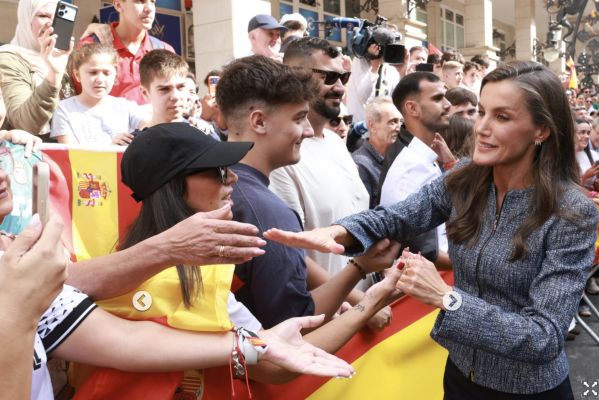
On October 13 the King and Queen visited Ceuta, and the Queen, besides greeting residents and taking a selfie with one of the women there, stopped at a place worth telling about: the public school Vicente Aleixandre, in the Manzanera district, outside the city walls. It has 141 pupils between the ages of 3 and 12, almost seven in ten of the Muslim faith and a little over a quarter Catholic. There, in a third-grade classroom, they learned about the MUS-E project, an idea of the violinist Yehudi Menuhin. It brings working artists from theater, dance, circus or the visual arts into classrooms, during school hours and in partnership with the teachers, so that art helps children of different backgrounds integrate and learn to live together. According to the local press, it has been running for more than twenty years in schools in Ceuta and Melilla. Doña Letizia wore gray, with black trousers and a secretary’s little jacket, a very Monday-morning outfit and without a single piece of jewelry saying «there’s a Queen here.»
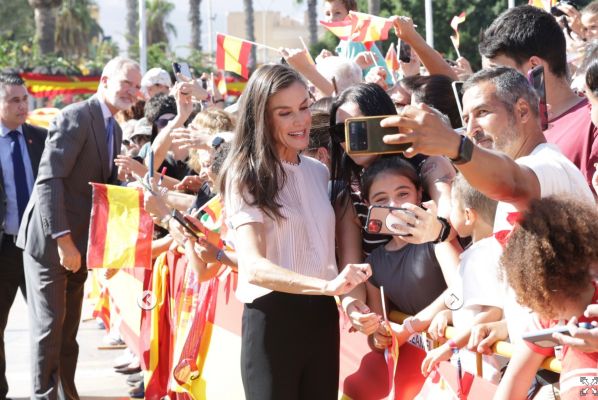
The next day it was Melilla’s turn, and once again the classroom was the great protagonist. In the Victoria neighborhood, the Pintor Eduardo Morillas school has more than 900 pupils and 79 teachers, and for 25 years it has run a bilingual educational project. The King and Queen toured early-childhood and primary classrooms and visited a dedicated classroom for students with autism spectrum disorder, designed to give each child the attention they need. At the school entrance, Doña Letizia was seen holding a baby in her arms, one of those photos that says more about a visit than any official program. In the afternoon they met with representatives of Melilla’s civil society, among them disability and health organizations, youth associations and the university. There the Queen appeared pinker and fresher than the day before, although the jewelry box, once again, stayed on vacation.
ACT 5: Planeta Novel Prize for Isabel Allende
Their Majesties the King and Queen presented the 75th Edition of the Planeta Novel Prize, coinciding with its 75th anniversary.
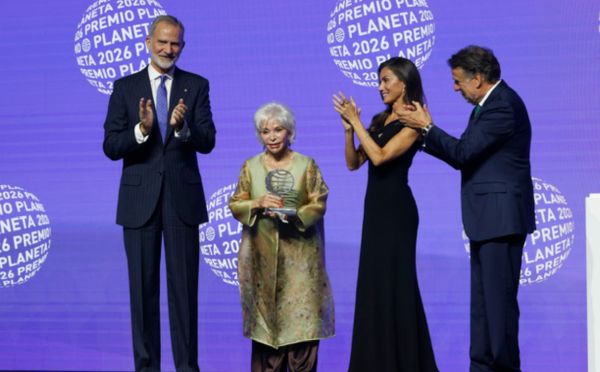
On October 15 the King and Queen presided, at the Montjuïc grounds of Fira de Barcelona, over the literary dinner with which the Planeta Novel Prize celebrated its 75 years, and they were the ones who presented the award. The King recalled that José Manuel Lara created it in 1952 to encourage reading in a Spain where having books within reach was still difficult, and there were videos with testimonies from previous winners and finalists, and an anniversary cake. The jury’s vote was settled during the dinner, and its spokesperson, Carmen Posadas, announced first the finalist, Sergio Hernández Carrasco, with «La añoranza» (Longing), and then the winner: Isabel Allende, with «La hora antes del alba» (The Hour Before Dawn). According to the press, the prize comes with one million euros. Allende, who is 84, had submitted the novel under a pseudonym, as if it were nothing. Doña Letizia wore head-to-toe black, as she likes on these occasions, with a bracelet and diamond earrings that I hope were the good ones, because a night like that deserves stones with pedigree.
With this book Allende returns to «The House of the Spirits» more than forty years later. It follows Alba, granddaughter of Clara and Esteban Trueba, and Allende herself describes it as a story of love and solidarity in the middle of a dark night. She says she closes that universe with it, and according to the press it has been in bookstores since November 4. I read «The House of the Spirits» many years ago, and I’m curious to see how I’ll find this sequel. I want to find out whether Allende has evolved as a writer the way I have evolved as a reader, or whether I’ll run into the same author my younger self loved so much. I’ll find out, and I’ll propose it to our book club.
ACT 6: Eve of the Princess of Asturias Awards
On the eve of the ceremony of the 2026 Princess of Asturias Awards, Their Majesties the King and Queen, accompanied by Their Royal Highnesses the Princess of Asturias and the Infanta Doña Sofía, presided over the 34th Princess of Asturias Awards Concert.
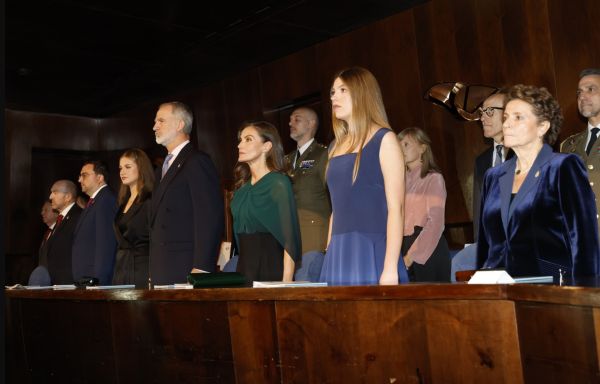
On October 22, in Oviedo, the King and Queen presided with their daughters over the 34th Princess of Asturias Awards Concert, the musical prelude to the awards ceremony. It was organized by the Princess of Asturias Foundation, with the collaboration of the CajAstur Foundation, at the Príncipe Felipe Auditorium and Congress Palace. The Symphony Orchestra of the Principality of Asturias and the Foundation’s choir, conducted by Nuno Coelho, performed Mendelssohn’s Symphony No. 2, known as the «Hymn of Praise,» with two sopranos and a tenor as soloists. The work was composed to celebrate four hundred years of Gutenberg’s printing press, and it has a certain charm that awards devoted to knowledge should open with music born of books. Afterwards they greeted the musicians and, outside the auditorium, Doña Letizia took a selfie with the public waiting there. She wore a black trouser suit, pointed shoes and a sort of green veil over her shoulders, much better than some lingerie-style outfits on other occasions, along with emerald earrings that surely brought out the beauty of her eyes.
The awards, which the Foundation created in 1980 to foster scientific, cultural and humanistic values, are granted in eight categories. This year, International Cooperation went to the Svalbard Global Seed Vault, in the Norwegian Arctic, where backup copies of seeds of crops from around the world are kept. It was created in 2008 and, according to the press, already safeguards more than 1.3 million samples, with capacity for 4.5 million. Also on the list are Patti Smith, Studio Ghibli, Leo Messi, Julian Barnes, astronaut Christina Koch, historian Timothy Garton Ash and three scientists in chemical and biophysical research. The following day there were audiences with the laureates, with the juries and with those who received the Medals of Asturias, before the ceremony at the Campoamor Theatre.
ACT 7: Princess of Asturias Awards
Their Majesties the King and Queen, accompanied by Their Royal Highnesses the Princess of Asturias and the Infanta Doña Sofía, presided over the presentation ceremony of the 2026 Princess of Asturias Foundation awards, held at the Campoamor Theatre in Oviedo, with the presence of Her Majesty Queen Doña Sofía.
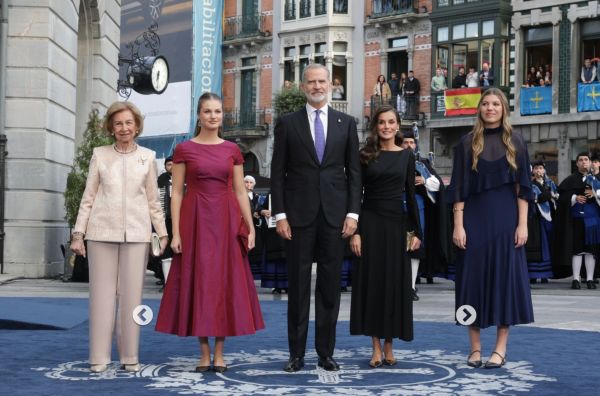
On the afternoon of October 23, the Campoamor Theatre in Oviedo hosted the Princess of Asturias Awards ceremony, the main activity of the foundation that has convened them since 1980 and that hands out eight awards every year. The King and Queen sat at the presidential table with their daughters, and Queen Sofía followed the ceremony from the Royal Box. The National Anthem was played by the Real Banda de Gaitas «Ciudad de Oviedo» (Oviedo’s royal bagpipe band), a version you only hear around here. The Princess of Asturias declared the ceremony open and she was the one who presented the awards. Among the laureates were several with stories that tell themselves: Studio Ghibli, founded in 1985 by Hayao Miyazaki, Isao Takahata and Toshio Suzuki, the studio behind «My Neighbor Totoro» and «Spirited Away»; writer Julian Barnes, who won the Booker Prize in 2011; and scientists Klenerman, Balasubramanian and Mayer, whose technology made it possible to sequence a human genome, once a matter of years and millions of dollars, in just a few hours.
Patti Smith used her turn at the podium to sing a song, which is not usual at a ceremony like this. When it was the Princess’s turn, she wondered how her generation faces such a complex world, and her answer was that it is indeed worth coming to Oviedo every year, because these lives and works help keep alive our capacity for wonder and our trust. The King spoke of the learning the awards leave behind, one that cannot be transferred or explained and can only be lived. The ceremony ended with Doña Leonor calling for the 2027 awards. That same morning, the Royal Family had received in audience the laureates, those awarded the Medals of Asturias and the presidents of the juries.
Act 8: Visit to the injured in Urda
Their Majesties the King and Queen visit the injured in the Urda (Toledo) train accident.
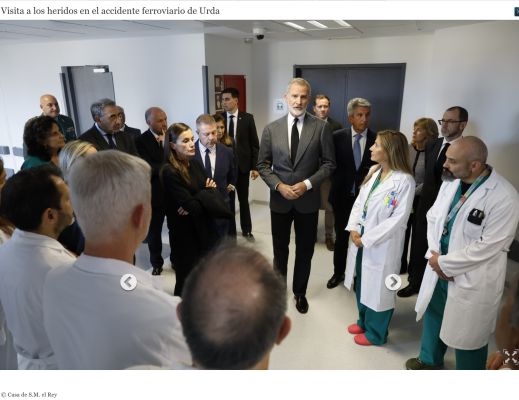
On October 29, after the train accident in Urda, in the province of Toledo, the King and Queen visited the Toledo University Hospital to ask after the condition of the injured, speak with their relatives, and thank the medical teams of Emergency, the surgical specialties and the intensive care unit for their work. They then went to the Casa Diocesana de Ejercicios «El Buen Pastor,» where psychologists and support teams are assisting the relatives of those who died and those still missing, and they listened to their explanations and spoke with some of them. That day, according to the Casa Real, of the 110 injured treated by the Castilla-La Mancha health service (SESCAM), 60 had already been discharged, and the four patients in most serious condition were progressing positively. From here we send our deepest condolences to those who lost their lives and to their families, and our thanks to the professionals and volunteers who are accompanying them.
ACT 9: Ibero-American Summit of Heads of State
Their Majesties the King and Queen presided over the opening ceremony of the 30th Ibero-American Summit of Heads of State and Government, which officially opens the 30th Ibero-American Summit, held in Madrid on November 4 and 5, 2026.
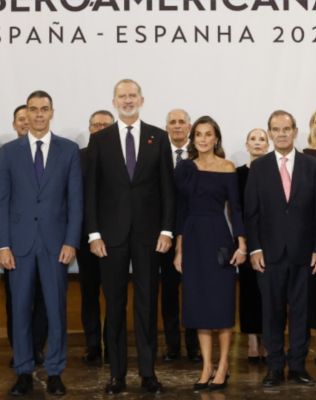
On November 4 and 5, Madrid hosted the 30th Ibero-American Summit, the meeting of the leaders of the 22 countries of the Ibero-American Community of Nations. It is the fourth organized by Spain, after those of Madrid (1992), Salamanca (2005) and Cádiz (2012). The King and Queen presided over the inauguration at the Teatro Real, where a minute of silence was observed beforehand for the victims of the Urda train accident, and then the dinner at the Royal Palace. The King asked that support for this community continue, as an example of cooperation, and recalled that its reason for being is to improve people’s everyday lives. Honduras took over the rotating presidency until 2028, so it will be the one to host the next summit.
The closest thing to an Ibero-American party was the music. Venezuela’s National Youth Symphony Orchestra, conducted by Gustavo Dudamel, played Arturo Márquez’s «Danzón No. 2,» there was flamenco with Miguel Poveda and Eva Yerbabuena, Jorge Drexler and Carminho sang in Spanish and in Portuguese, and the finale was «Canción con todos,» with Rozalén and Lila Downs. Doña Letizia repeated an outfit that we already celebrated a lot on this blog and that still suits her wonderfully, with shoes and a hairstyle to match, although, as always, we missed a jewel that said «there’s a Queen here.»
ACT 10: Activities related to the Ibero-American Summit
Her Majesty the Queen takes part in several activities at the Royal Palace of El Pardo on the occasion of the 30th Ibero-American Summit of Heads of State and Government.
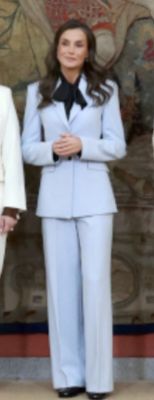
On November 5, at the Royal Palace of El Pardo, Doña Letizia’s team organized a working day for the companions of the leaders attending the 30th Ibero-American Summit. It had two themes, linked, as she explained, to respect for people’s dignity: a round table with specialists from Paraguay, Spain and Bolivia on human trafficking, and two inclusive performing-arts works.
The Costa Rican press told a charming detail. The Queen welcomed the guests with a feminine plural «bienvenidas» (welcome), because most of them were women, and immediately clarified that it included everyone, naming Jeffrey Umaña, Costa Rica’s first gentleman, and the husband of Venezuela’s foreign minister. Among those present were the first ladies of Chile, Bolivia, Honduras and Ecuador.
On the artistic side, a group of young people aged 12 to 16 performed «Sin banquillos,» a forum-theater play from the «Yo Cuento» project, which a hospital in Montevideo has already adapted. Afterwards, six dancers from the Fritsch Company performed «Des/envolturas,» with the Fundación Ballet Maite León, created in 1986 and home to an inclusive arts school of 350 students.
Doña Letizia was dressed as an assistant, as if she were the one handing out the folders, and without a single piece of jewelry. The scarf around her neck was a good complement, and she wore a neat hairstyle.
ACT 11: Funeral
Their Majesties the King and Queen attended the funeral mass in memory of those who died in the Urda (Toledo) train accident, officiated by the Archbishop of Toledo.
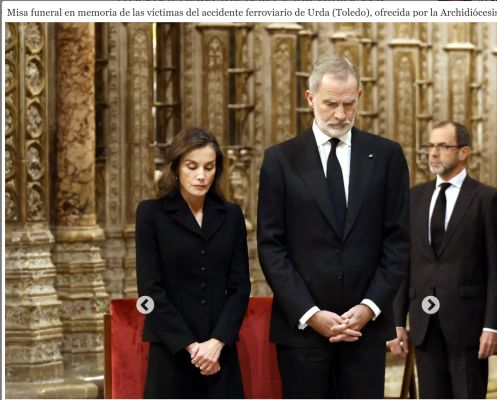
On November 10, the King and Queen attended, at the Primatial Cathedral of Toledo, the funeral mass for the 69 people who died in the Urda train accident of last October 28, officiated by the Archbishop of Toledo. Afterwards they greeted relatives of the victims and some of the injured, and Doña Letizia conveyed her condolences to them. From here, our remembrance and our deepest condolences to their families.
ACT 12: Visit to the Amica campus
Her Majesty the Queen visited Campus Diversia, a socio-environmental project of Amica, conceived as a Reference Center for Social Inclusion, Employment and Environmental Education.
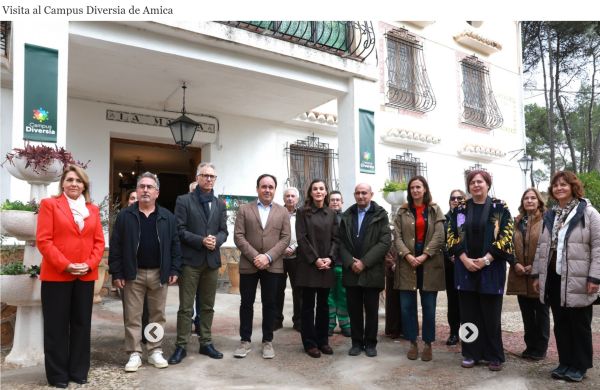
On November 13, Doña Letizia visited Campus Diversia in Yátova (Valencia), a project of the Amica association that combines employment for people with disabilities with caring for the countryside. It covers 412 hectares, a little more than five hundred football fields, watered by the Mijares river and with forests, olive groves and centuries-old irrigation channels, some of them, they say, of Arab origin and more than eight hundred years old. It also has a 19th-century farmhouse where schools and associations stay. Amica, with more than forty years of work, has served more than 9,000 people, and the campus’s fame reaches far: a Japanese university sponsored a square meter of its forest a few years ago.
Letizia toured the dome, where schoolchildren from Yátova presented their projects on aromatic plants and caring for nature, and the garden of scents, where she learned about outdoor learning and therapy activities. She blended in so well among the attendees that in the photo it’s hard to say which one is the Queen, and her hair looked like it was begging for a wash, as if it hadn’t been to the hairdresser since the previous events. The visit ended with a tribute to the victims of the DANA floods, with an olive tree planted by the Queen and a commemorative plaque, and a meeting with the olive grove workers.
The Idea Drawer
Welcome to the Idea Drawer, successor to the old Rescue Drawer. We used to open the Queen’s wardrobe and jewelry box to dream of tiaras and brooches, and now the drawer fills with ideas for the causes she supports. Here I imagine, out loud and with great respect, how she could give them even more reach, and I ask you to help me think about how to bring them down to an earthly scale. From time to time, don’t be alarmed, I’ll open the jewelry drawer too.
To start, three ideas. The first, a follow-up visit to Campus Diversia in the middle of the olive harvest, to watch the olive tree she planted on November 13 grow and to see the fruit of the work of those who tend the grove. It would fit an agenda of short visits, the kind that look at results and not only at the inauguration, and you can do something similar by asking a nearby farm or sheltered-employment center whether it holds open days. The second, to give a stage to the inclusive companies we saw at El Pardo, for example with a piece at the ceremony for the National Disability Awards that bear her name, and at home you can propose a forum theater at the neighborhood school. The third, a bridge between the two worlds of the week: a visit to a project that grows local seed varieties together with people with disabilities, which would be a homegrown echo of Svalbard and which you can imitate with a seed swap at your town library.
That’s where this first post of the new chapter ends, and I confess I loved looking at what lies behind each photo: the olive trees planted by hands that no one used to hire, the stages opening up to those who didn’t usually step onto them, the seeds kept in the ice so that no one goes without bread. I know nothing about almost all of this, but that’s what you are for. Tell me in the comments which projects you know near home, what occurs to you for the Idea Drawer, and what you think of Allende’s novel, which I’ll soon propose to our book club. Thank you for joining me in this change, and until the next installment.
Best wishes, and see you next time!
[…] Click here to read this article in English […]